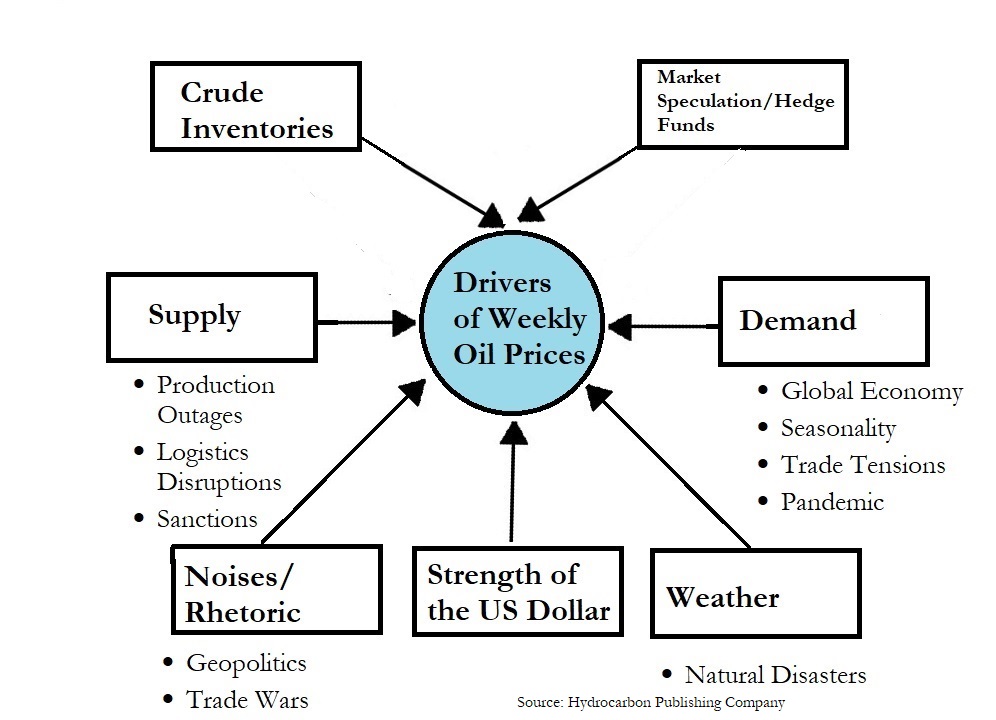
Energy markets are navigating unprecedented supply constraints stemming from the five-month-old US-Iran conflict, which has closed the critical Strait of Hormuz chokepoint and cost the global market an estimated 2.6 B bbl of oil.
August 10, 2026
Crude oil futures experienced a highly volatile week driven by oscillating headlines surrounding potential diplomatic breakthroughs in the Strait of Hormuz conflict.
August 08, 2026
Oil futures enter the week (Aug. 10-14) caught in a sharp division between speculative headline sensitivity surrounding US-Iran diplomatic discussions and underlying physical market tightness.
August 08, 2026
The five-month-old Iran war has triggered a global refining boom, pushing refining margins to record highs as disruptions in the Strait of Hormuz, reduced Asian throughput, and export restrictions squeezed diesel, gasoline, and jet fuel markets.
August 08, 2026
Despite a 6%+ drop in crude futures following the suspension of military strikes against Iran, U.S. retail fuel prices remain elevated across all refined products.
August 07, 2026
Seven months after Maduro's removal, Venezuela's oil sector has recovered to ~1.07-1.22 MM b/d (up from 937K b/d in 2025), with US exports hitting a seven-year high of 786K b/d in Jul.
August 07, 2026
As reported in our insights on Aug. 03,
August 07, 2026
As the Strait of Hormuz blockade constrains Persian Gulf oil flows, key OPEC+ producers Kuwait and Saudi Arabia are adapting through increased production and infrastructure expansion.
August 06, 2026
The Middle East conflict and Strait of Hormuz disruptions have fundamentally altered crude oil trade flows, with Asia's two largest importers adapting through contrasting strategies.
August 06, 2026
As discussed in the insights on Aug. 3, the escalation of Middle Eastern conflict—marked by US military operations against Iran and shipping disruptions through the Strait of Hormuz—has ignited a global oil price shock that is fundamentally reshaping the transportation fuel industry, leading to rapid growth of electric vehicles (EVs). Meanwhile, rising geopolitical instability, coupled with stringent global decarbonization mandates, has simultaneously accelerated global biofuel demand for supply security and climate goals.
August 06, 2026